
Everyone I know who works somewhere in the social justice - change making sphere is either burnt- out, recovering from burn-out or desperately trying to keep it from claiming them too. The truth is, I’ve been in movement work for over 25 years and I don’t have any clear memories of it being different. Oh sure, we hear about those dream workplaces, almost legend passed between us as signs of hope or possibility. Almost always, these fabled workplaces rested on one thing- leadership’s mindset. It’s the unspoken truth- culture always wins over paper, whatever policy is in place the way it is interpreted is through the lens of who sets the tone.
Burnout in change-making work is usually talked about as an individual problem: people need better boundaries, stronger resilience, or more self-care. And yes, they can help, but they can’t resolve the exhaustion created by an organization that consistently asks people to work against its stated values. The tension it creates is this- the organization, by extension, is asking you to work against your own values. There may be policies that promise balance, collaboration, or care. Yet people may still encounter unnecessary administrative tasks, meetings that seem to generate more meetings, and processes that look participatory without meaningfully shaping decisions. So even though it’s all there on paper the gap between policy and practice keeps widening, the work then feels draining in a particular way: not just busy, but disconnected from purpose, the worst feeling. I think this is an experience too many people in mission-driven spaces are having: spending time demonstrating that work is happening instead of making the work more useful, more humane, or more effective. You can’t self-care your way out of that level of fatigue. You can’t. Individual grounding and recovery practices matter, but they are not substitutes for examining the systems that repeatedly create unnecessary strain.
Leaders’ mindsets become organizational culture
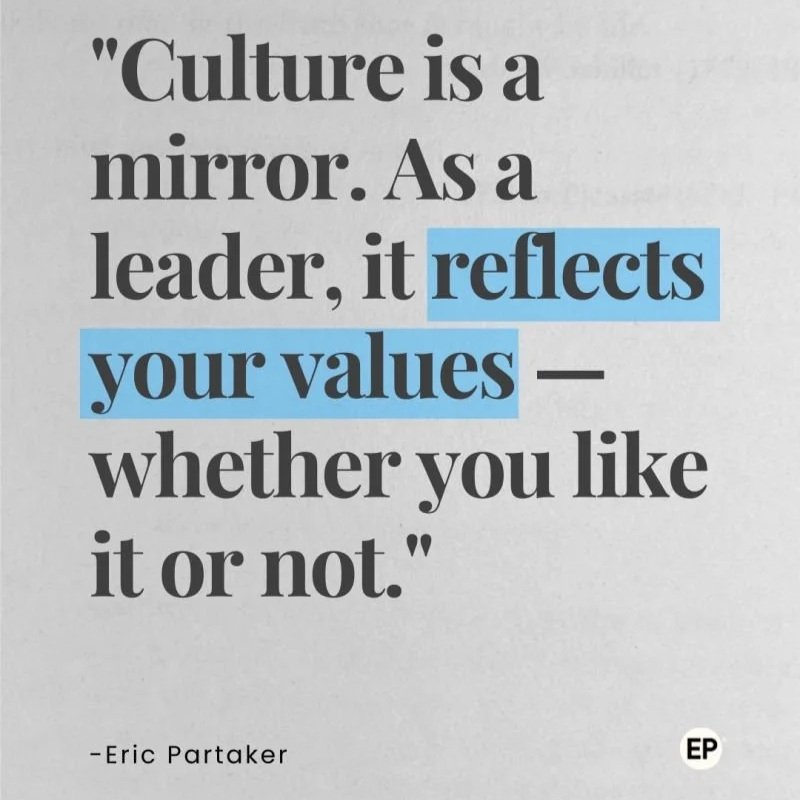
Culture isn’t shaped by official policies, not really, it’s the leaders’ everyday beliefs and choices. What gets treated as urgent? How much trust do they extend and to whom? What happens when someone raises a concern? Are processes designed to support the work, or have they become habits no one feels able to question? All of their answers influence how people communicate, make decisions, use their time, and understand what is valued. Over time, a leader’s mindset can become an organizational norm. That’s why changing a policy without examining the beliefs underneath it can produce little change in practice. A new procedure may be added to an already crowded system, but the underlying expectations that created the problem remain untouched.
Leaders can begin by asking whether familiar practices still serve the organization and its people. Does this process help us make better decisions? Does this meeting create clarity or simply consume time? Are we answering organizational needs or my own personal needs?
Moving from reflection to action
Okay, time to be uncomfortable- examining our assumptions is not an exercise in blame, even though it can feel that way in the moment. Think of it as data, a way to understand how our choices affect other people and to make more intentional ones. Leaders who can question their own urgency, habits, and expectations have more room to respond creatively instead of repeating the same patterns. Innovation is born out of this ability, and in no time in recent history have we needed innovation and fresh perspectives more.
In my work with leaders and organizations, I help make that reflection practical. Drawing on more than 20 years of organizing and leadership experience, I support leaders in identifying the mindsets shaping their practices and translating new insights into concrete action.
The aim isn’t change for its own sake. It’s to build stronger alignment between what an organization says it values and how people actually experience working there, and to create the conditions for more focused, sustainable, high-impact work.
If you’re ready to examine the assumptions and habits shaping you or your organization, schedule a free consultation here: https://scheduler.zoom.us/anne-with-the-plan/free-consultation.
